

The First Days Home Are the Most Dangerous
Roughly 20% of Medicare beneficiaries are readmitted to the hospital within 30 days of discharge, costing the healthcare system over $26 billion annually, according to the Agency for Healthcare Research and Quality (AHRQ). That's not just a budget problem. It means millions of older adults are going home before they're truly ready, and there's no one there to catch the warning signs.
The period right after a hospital stay is sometimes called the "post-discharge danger zone." Your loved one may look better than they did a few days ago. They're talking, eating, eager to sleep in their own bed. But underneath that surface improvement, their body is still healing. Medications are new or changed. Mobility is limited. The risk of falls, infections, and medication mix-ups spikes.

This is exactly why families across Fort Wayne turn to 24-hour home care during the first days and weeks after discharge. Having a trained caregiver present around the clock doesn't just bring peace of mind. It directly reduces the odds of a return trip to the ER.
What 24-Hour Post-Hospital Care Actually Looks Like
When people hear "24-hour care," they sometimes picture a hospital-like setup at home. It's not that at all. The goal is to blend professional support into the comfort of home so your loved one can rest and recover in familiar surroundings.
Here's what a typical day might include:
Morning Routine
A caregiver helps your loved one get out of bed safely, assists with bathing and dressing, and prepares a nutritious breakfast. They administer morning medications at the correct times and dosages, following the discharge instructions to the letter. If physical therapy exercises were prescribed, the caregiver encourages and assists with those routines.
Afternoon Support
Caregivers monitor vital signs, watch for changes in pain levels, and keep track of fluid intake and output when necessary. They prepare lunch, help with light mobility exercises, and provide companionship so your loved one doesn't feel isolated during recovery. Isolation after a hospital stay can lead to depression, which itself slows healing.
Evening and Overnight
This is when many post-hospital emergencies happen. A caregiver helps with dinner, evening medications, and getting ready for bed. Overnight, they're available if your loved one needs to use the bathroom (a prime time for falls), experiences sudden pain, or shows signs of complications like fever, confusion, or breathing difficulty.
The difference between live-in care and 24-hour shift care matters here. After a hospital stay, shift-based care is often the better choice because your loved one may need active help during nighttime hours, and shift caregivers remain fully awake and alert throughout the night.
Conditions That Often Require Post-Hospital Home Care
Not every hospital stay demands 24-hour care afterward. A healthy 50-year-old having a routine outpatient procedure probably doesn't need round-the-clock support. But for older adults, especially those with multiple health conditions, the recovery picture is different.
Hip and Joint Replacement
Hip and knee replacements are among the most common surgeries for adults over 65. The National Institutes of Health (NIH) notes that recovery involves strict movement restrictions, pain management, and a structured physical therapy schedule. Falls during this period can damage the new joint and send your loved one right back to surgery. A caregiver provides steady physical support for walking, bathing, and transferring in and out of chairs.
Heart Surgery and Cardiac Events
After heart bypass surgery, valve replacement, or a serious cardiac event like a heart attack, the recovery protocol is demanding. Medications are tightly scheduled. Activity must be carefully increased. Warning signs like chest pain, sudden weight gain from fluid retention, or shortness of breath need immediate attention. Post-surgical care from a trained caregiver means someone is always watching for these red flags.
Stroke Recovery
Stroke survivors often come home with new physical or cognitive limitations that weren't there before the hospital stay. The National Institute on Aging (NIA) reports that early, consistent support during the weeks after discharge plays a major role in long-term recovery outcomes. Caregivers assist with speech exercises, mobility practice, and daily tasks that may now require help.
Falls and Fractures
The Centers for Disease Control and Prevention (CDC) reports that falls are the leading cause of injury-related death among adults 65 and older, and one in four older adults falls each year. When a senior is hospitalized for a fall-related fracture, the risk of a second fall during recovery is even higher because of reduced strength and balance. Around-the-clock care keeps someone close by every time your loved one moves.
Surgery Complicated by Dementia or Cognitive Decline
When a person with dementia or Alzheimer's disease returns from a hospital stay, the confusion can be severe. Hospital environments often worsen cognitive symptoms, a condition known as hospital-induced delirium. Returning home helps, but these individuals need specialized dementia care to stay safe, follow medication schedules, and adjust back to their routine.
Signs Your Loved One Needs More Support Than Expected
Families often underestimate what post-hospital recovery demands. Your mom says she's fine. Your dad insists he doesn't need help. But the body tells a different story.
Watch for these signals that recovery isn't going smoothly:
- Increased confusion or disorientation, especially in the evenings (called "sundowning")
- Skipping or doubling up on medications because the schedule is confusing
- Refusing to eat or drink enough, leading to dehydration
- Difficulty getting to the bathroom safely, resulting in falls or near-falls
- Wound redness, swelling, or drainage that suggests infection
- New or worsening pain that isn't controlled by prescribed medication
- Withdrawal or depression, losing interest in conversation or activities
- Shortness of breath, dizziness, or sudden swelling that could signal a cardiac issue
If you're noticing several of these, it's time to bring in professional help. This article on 10 signs your parent needs round-the-clock care covers the broader picture beyond post-hospital situations.
Working With Hospital Discharge Planning
A smooth transition from hospital to home doesn't happen by accident. It takes coordination, and the discharge planning process is your best opportunity to set things up right.
Before Discharge Day
Ask the hospital's discharge planner or social worker these questions:
- What medications are changing? Get a complete, written medication list with dosages, timing, and purpose. The AHRQ identifies medication errors during transitions as a leading cause of post-discharge complications.
- What are the warning signs to watch for? Each condition has specific red flags. Make sure you know exactly what should trigger a call to the doctor versus a trip to the ER.
- What follow-up appointments are needed? Surgeons, primary care physicians, specialists, and therapists may all need to see your loved one within the first two weeks.
- What equipment does the home need? Hospital beds, walkers, shower chairs, and grab bars should be in place before your loved one arrives home.
- Is home care recommended? Many discharge planners will specifically recommend in-home assistance. If they don't bring it up, ask directly.
Communicating With Your Home Care Provider
When you contact a home care agency like At Home Healers, share the full discharge paperwork. The more information your caregivers have, the better they can support recovery. This includes medication lists, activity restrictions, dietary guidelines, wound care instructions, and scheduled follow-up visits.
Practical Tips for the First Week Home
The first seven days after discharge set the tone for the entire recovery. Here's what experienced caregivers know makes the biggest difference:
Set Up a Recovery Station
Choose one room, ideally on the main floor, where your loved one will spend most of their time. Stock it with water, medications, a phone, the TV remote, and anything else they reach for regularly. The fewer times they need to get up unnecessarily, the lower the fall risk.
Follow the Medication Schedule Exactly
New medications, changed dosages, and unfamiliar timing create a recipe for errors. A written schedule posted in a visible spot helps. Better yet, a caregiver who manages medications professionally takes that worry off the table entirely.
Don't Skip Meals
Recovery burns calories and nutrients. Even if your loved one doesn't feel hungry, small, frequent meals keep energy up and support healing. Protein is especially helpful for tissue repair after surgery.
Move, But Carefully
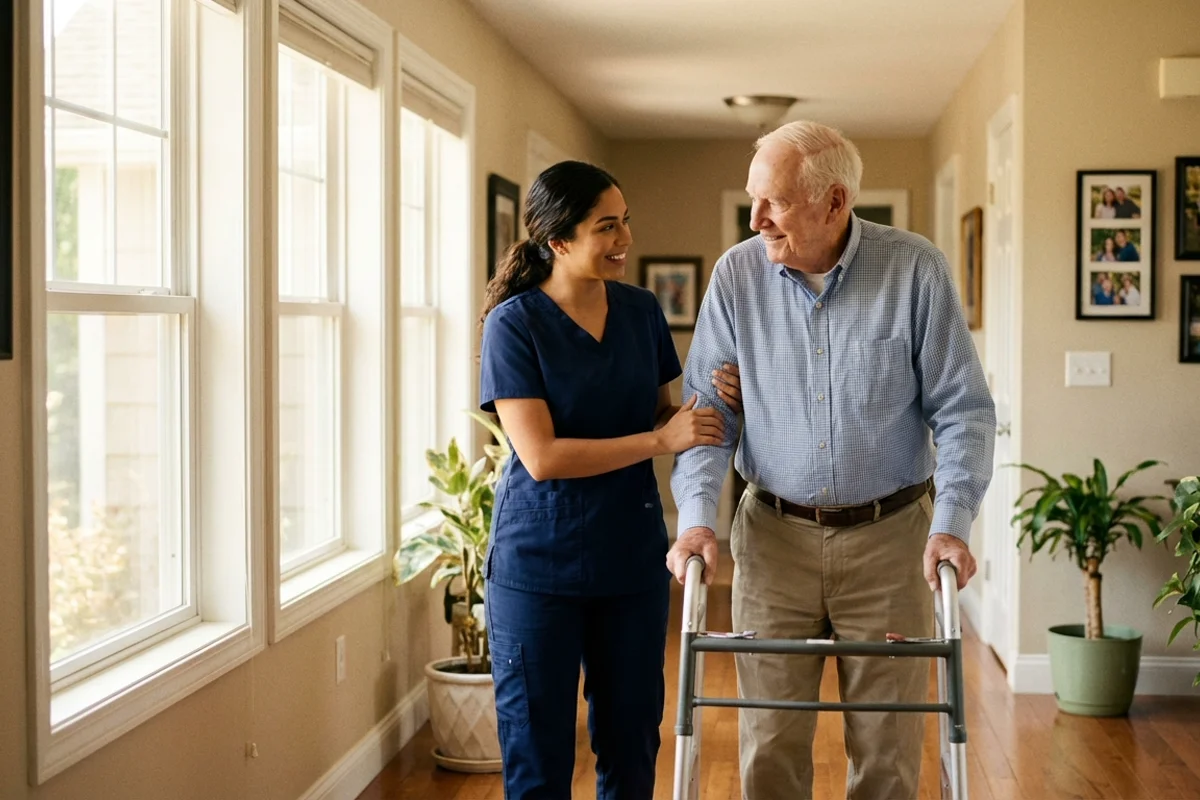
Bed rest sounds appealing after surgery, but too much inactivity leads to blood clots, pneumonia, and muscle loss. Follow the doctor's activity guidelines. A caregiver helps your loved one move safely, offering a steady arm for walking and making sure they don't push too hard too fast.
Watch for Emotional Changes
Coming home from the hospital can bring unexpected emotions. Relief mixed with fear. Frustration at needing help. Grief over lost independence. These feelings are normal, and having a compassionate caregiver present provides emotional support that family members, stretched thin by their own responsibilities, can't always offer consistently.
Keep a Recovery Journal
Write down daily observations: pain levels, appetite, mood, sleep quality, bowel movements, medication times. This record is invaluable at follow-up appointments and helps you spot trends that might not be obvious day to day.
How Long Does Post-Hospital Care Usually Last?
There's no one-size-fits-all answer. Some families need 24-hour care for just the first three to five days after discharge. Others, especially after major surgery or a stroke, may need weeks of around-the-clock support before stepping down to daytime-only or part-time care.
Many families start with 24-hour care and gradually reduce hours as their loved one regains strength and independence. A good home care agency adjusts the care plan as recovery progresses rather than locking you into a rigid schedule.
It's also worth thinking about cost. Twenty-four-hour care is an investment, but compared to a hospital readmission that runs tens of thousands of dollars, it's often the more affordable path. Some long-term care insurance policies and VA benefits cover post-hospital home care, so check your loved one's coverage before assuming it's all out of pocket.
When Post-Hospital Care Reveals a Bigger Need
Sometimes the recovery period opens your eyes to something you hadn't fully recognized. Maybe your father was managing okay before the surgery, but now you can see that his balance was already declining, his meals were irregular, and his house wasn't as safe as you thought.
If post-hospital care reveals that your loved one needs ongoing support, that's not a failure. It's valuable information. Many families use the recovery period to evaluate whether longer-term home care makes sense. Respite care can bridge the gap while you make those decisions, giving family caregivers a break while keeping your loved one safe.
At Home Healers Post-Hospital Recovery Services
At Home Healers provides 24-hour post-hospital care throughout northeast Indiana. Our caregivers work directly with hospital discharge teams to create a smooth transition home, and we can often begin care within 24 hours of your call.
Our post-hospital care includes:
- Around-the-clock monitoring and safety support
- Medication reminders and schedule management
- Meal preparation following dietary restrictions
- Mobility assistance and fall prevention
- Wound care observation and reporting
- Transportation to follow-up appointments
- Communication with your loved one's medical team
- Emotional support and companionship during recovery
We serve families in Fort Wayne, Auburn, Huntington, and communities throughout Allen County and the surrounding region.
Planning a hospital discharge? Don't wait until the day your loved one comes home. Contact us now to discuss a care plan so everything is in place when they walk through the door. Call us at (260) 420-2229 or reach out through our website to schedule a free consultation.
Frequently Asked Questions
How soon after a hospital stay should home care start?
Ideally, 24-hour care should begin the same day your loved one comes home. The first 48-72 hours after discharge carry the highest risk for falls, medication errors, and complications that lead to readmission.
What does a caregiver do after a hospital discharge?
Post-hospital caregivers help with medication management, wound care monitoring, mobility assistance, meal preparation, transportation to follow-up appointments, and watching for warning signs of complications.
Does insurance cover 24-hour care after surgery?
Medicare covers home health care (nursing, therapy) after a hospital stay but not non-medical 24-hour caregiving. Medicaid waivers, VA benefits, and some long-term care insurance policies may help cover the cost.


