

Dementia Is Not a Single Disease
Alzheimer's disease accounts for 60 to 80 percent of all dementia cases, but dementia itself is not one disease. It's an umbrella term that covers several conditions affecting memory, thinking, and the ability to perform daily activities. Many families we work with in Fort Wayne are surprised to learn that their loved one's symptoms may point to a very different condition than what they assumed.
This distinction matters more than you might think. Each type of dementia has its own causes, symptom patterns, and rate of progression. The type of dementia your loved one has directly shapes what kind of care they'll need, how quickly things may change, and which treatments or strategies will work best.
Let's break down the four most common types so you can better understand what your family is facing.

Understanding the type of dementia your loved one has helps guide care planning and day-to-day support.
Alzheimer's Disease: The Most Common Type
Alzheimer's disease is the form of dementia most people recognize. According to the Alzheimer's Association's 2024 Facts and Figures report, an estimated 6.9 million Americans age 65 and older are living with Alzheimer's. It's the most common cause of dementia by a significant margin.
What Happens in the Brain
Alzheimer's develops when abnormal protein deposits, specifically beta-amyloid plaques and tau tangles, build up in brain tissue and destroy connections between nerve cells. This damage typically starts in the hippocampus, the part of the brain responsible for forming new memories, which explains why short-term memory loss is usually the first symptom families notice.
Key Symptoms and Progression
Alzheimer's tends to follow a gradual, predictable progression:
- Early stage: Repeating questions, forgetting recent conversations, misplacing items, difficulty with planning and organization
- Middle stage: Confusion about time and place, trouble recognizing family members, personality changes, sundowning behavior, wandering
- Late stage: Severe memory loss, inability to communicate, loss of physical abilities, full dependence on caregivers
The average person lives four to eight years after diagnosis, though some live as long as 20 years, according to the National Institute on Aging.
What Sets Alzheimer's Apart
The hallmark of Alzheimer's is a slow, steady decline that begins with memory. Unlike some other types of dementia, cognitive changes in Alzheimer's are typically the first and most prominent symptom, with physical symptoms developing later.
Vascular Dementia: The Second Most Common Type
Vascular dementia is the second most common form, accounting for roughly 5 to 10 percent of dementia cases. It develops when blood flow to the brain is reduced or blocked, causing brain cells to become damaged or die.
Causes
Unlike Alzheimer's, vascular dementia has a clear vascular cause:
- Stroke: A major stroke or series of small strokes can damage brain tissue
- Chronic reduced blood flow: Narrowed or damaged blood vessels gradually starve brain cells
- Risk factors: High blood pressure, diabetes, high cholesterol, smoking, and heart disease all increase risk
Key Symptoms and Progression
Vascular dementia symptoms vary depending on which part of the brain is affected. Rather than the gradual decline seen in Alzheimer's, vascular dementia often follows a "staircase" pattern, where abilities drop suddenly after a stroke or vascular event, then stabilize for a time before the next decline.
Common symptoms include:
- Difficulty with planning, organizing, and making decisions (often more prominent than memory loss early on)
- Slowed thinking and trouble concentrating
- Confusion and disorientation
- Difficulty walking or balancing
- Mood changes, including depression and apathy
What Sets Vascular Dementia Apart
The key difference is onset and pattern. Vascular dementia can appear suddenly after a stroke rather than building gradually. Early symptoms often center on judgment and planning rather than memory. Physical symptoms like difficulty walking tend to appear earlier than in Alzheimer's.
Lewy Body Dementia: A Complex and Often Misdiagnosed Type
Lewy body dementia (LBD) accounts for 5 to 10 percent of dementia cases, making it the third most common type. It develops when abnormal protein deposits called Lewy bodies accumulate in nerve cells throughout the brain.
Two Forms of LBD
Lewy body dementia actually includes two related conditions:
- Dementia with Lewy bodies (DLB): Cognitive symptoms appear first
- Parkinson's disease dementia: Movement symptoms appear first, with cognitive decline developing later
Key Symptoms and Progression
LBD has a distinctive symptom profile that sets it apart from Alzheimer's:
- Visual hallucinations: Detailed, vivid hallucinations are common, especially early in the disease. Your loved one may see people, animals, or objects that aren't there.
- Fluctuating cognition: Alertness and attention can shift dramatically within the same day or even the same hour. One moment your loved one may seem clear and oriented; the next, confused and drowsy.
- Movement problems: Rigid muscles, slow movement, tremors, and shuffling gait, similar to Parkinson's disease
- REM sleep behavior disorder: Acting out dreams during sleep, sometimes violently, often appearing years before other symptoms
- Sensitivity to certain medications: Some antipsychotic medications can cause severe, even life-threatening reactions in people with LBD
What Sets Lewy Body Dementia Apart
The combination of visual hallucinations, dramatic fluctuations in alertness, and movement problems is the clearest marker. Memory loss may not be as prominent in the early stages as it is with Alzheimer's. The medication sensitivity issue makes accurate diagnosis especially critical. If your loved one has LBD, their care team needs to know so they can avoid potentially dangerous drug interactions.
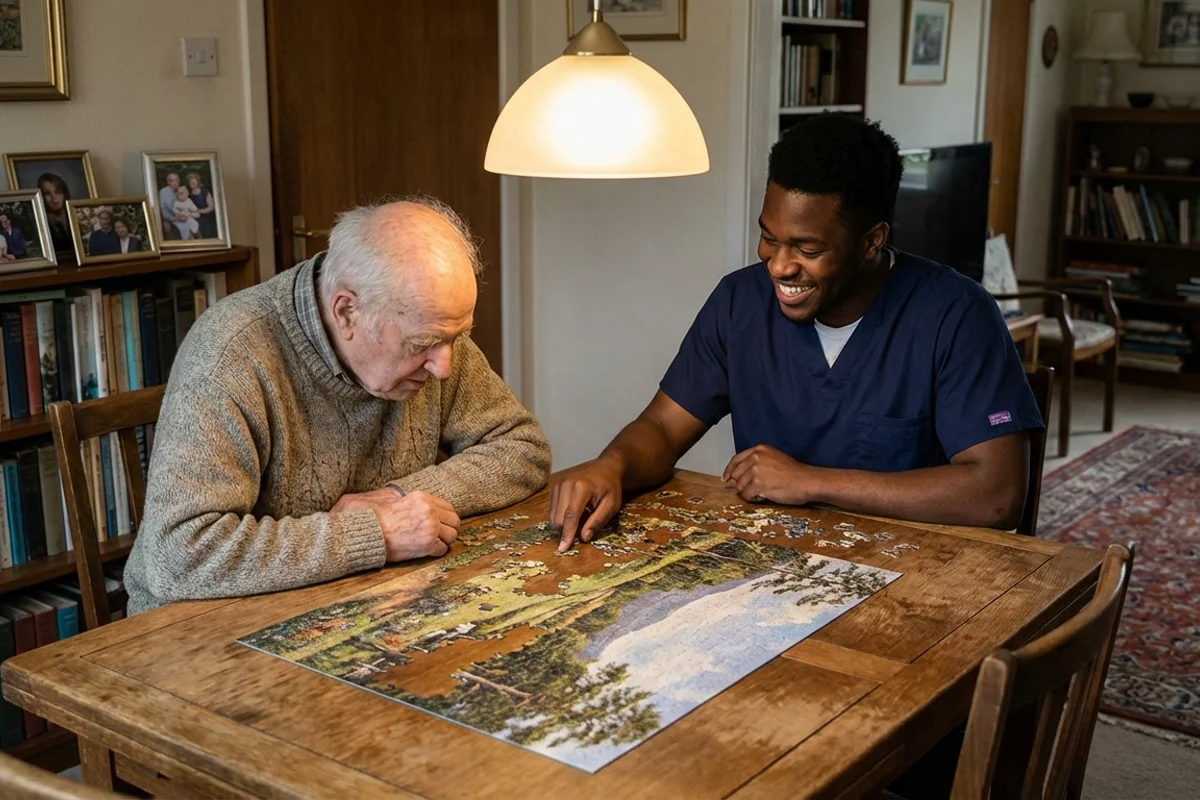
Meaningful activities look different depending on the type of dementia. Personalized care makes all the difference.
Frontotemporal Dementia: A Different Pattern Entirely
Frontotemporal dementia (FTD) is less common, accounting for an estimated 10 to 20 percent of dementia cases according to the Mayo Clinic. It tends to strike earlier than other types, often between ages 45 and 65, though it can occur later.
What Happens in the Brain
FTD involves progressive damage to the frontal and temporal lobes, the brain regions that control personality, behavior, and language. Unlike Alzheimer's, FTD does not typically involve amyloid plaques or tau tangles in the same pattern.
Three Main Variants
FTD presents in different ways depending on which part of the brain is most affected:
- Behavioral variant FTD: Changes in personality, judgment, and social behavior are the primary symptoms. A person may become impulsive, lose empathy, develop obsessive behaviors, or act in socially inappropriate ways.
- Primary progressive aphasia (language variant): Difficulty speaking, finding words, or understanding language gradually worsens.
- Movement disorders: Some forms of FTD also affect motor function, causing problems similar to ALS or Parkinson's disease.
What Sets Frontotemporal Dementia Apart
The biggest distinction is that FTD often starts with dramatic personality and behavior changes rather than memory loss. A family member who was always kind and considerate may become rude, apathetic, or impulsive. Because these changes don't look like "typical" dementia, FTD is frequently misdiagnosed as a psychiatric condition, especially in younger patients.
Comparing the Four Major Types
Here's a side-by-side look at how these conditions differ:
| Feature | Alzheimer's | Vascular Dementia | Lewy Body Dementia | Frontotemporal Dementia |
|---|---|---|---|---|
| Percentage of cases | 60-80% | 5-10% | 5-10% | 10-20% |
| Typical age of onset | 65+ | 65+ | 50-85 | 45-65 |
| First symptoms | Memory loss | Problems with planning and judgment | Visual hallucinations, fluctuating attention | Personality and behavior changes |
| Progression pattern | Gradual, steady decline | Sudden drops ("staircase" pattern) | Fluctuating, with good and bad periods | Variable, often faster than Alzheimer's |
| Movement issues | Late stage | May appear early | Parkinson's-like symptoms | Some variants |
| Memory affected | Early and prominently | Later or less prominent | Later or less prominent | Later; may remain intact longer |
A person can also have mixed dementia, meaning two or more types occur together. The most common combination is Alzheimer's and vascular dementia. This is more common than previously thought and can make diagnosis and care planning more complex.
Why Getting the Right Diagnosis Matters
You might wonder whether the specific type of dementia really makes a difference in day-to-day care. It does, and here's why.
Treatment Approaches Differ
Medications approved for Alzheimer's, such as cholinesterase inhibitors, may help with Lewy body dementia but are less effective for frontotemporal dementia. Some medications that are routinely used for behavioral symptoms can be dangerous for people with LBD. Getting the diagnosis right means getting the treatment plan right.
Care Strategies Change
A person with frontotemporal dementia who is acting impulsively needs a different approach than a person with Alzheimer's who is repeating questions. How you communicate with your loved one, how you structure their environment, and how you respond to challenging behaviors all depend on what's happening in their brain.
Planning Ahead Is Different
The progression timeline varies significantly by type. FTD in a 55-year-old creates different practical challenges than Alzheimer's in an 80-year-old. Knowing what to expect helps families plan for financial needs, 24-hour care transitions, and legal decisions.
Family Understanding Improves
When families understand the specific type of dementia, they stop blaming themselves or their loved one for symptoms that are caused by the disease. A husband with behavioral variant FTD who has lost empathy isn't choosing to be unkind. Understanding the condition brings patience and helps families recognize when they need professional help.
Fort Wayne Resources for Dementia Diagnosis
If you suspect your loved one may have dementia but don't yet have a diagnosis, or if you want a second opinion on the specific type, these steps can help:
-
Start with their primary care physician. A thorough medical evaluation can rule out treatable causes of cognitive decline like thyroid disorders, medication side effects, vitamin deficiencies, or depression.
-
Ask for a referral to a neurologist or geriatrician. Specialists can perform detailed cognitive testing, brain imaging, and other assessments to distinguish between dementia types.
-
Contact the Alzheimer's Association Greater Indiana Chapter. They offer free care consultations, support groups, and can connect you with local diagnostic resources. Reach out at 1-800-272-3900 or visit alz.org.
-
Consider a geriatric assessment. Some Fort Wayne area physicians offer geriatric evaluations that look at the whole picture, including cognitive function, physical health, medications, safety, and caregiver needs.
Getting a specific diagnosis can feel overwhelming, but it gives your family the information needed to provide the right kind of support.
At Home Healers Dementia Care Services
At At Home Healers, we understand that every form of dementia requires a thoughtful, personalized approach. Our specialized dementia care team works with families across the Fort Wayne area to provide support tailored to your loved one's specific condition and needs.
Our dementia care services include:
- Personalized care plans built around the specific type of dementia and your loved one's current abilities
- Trained caregivers who understand the differences between dementia types and know how to respond to the unique challenges each one presents
- Companionship and engagement that keeps your loved one active, stimulated, and connected
- Respite care that gives family caregivers the break they need to recharge
- 24-hour home care for families who need round-the-clock support as the condition progresses
We serve families throughout Fort Wayne, Auburn, Huntington, and surrounding communities.
If your family is facing a dementia diagnosis, or if you're seeing signs that professional care may be needed, we're here to help. Contact us today to schedule a free in-home assessment and learn how we can support your family.
Frequently Asked Questions
How can you tell if it's Alzheimer's or another type of dementia?
Alzheimer's typically starts with gradual memory loss, while vascular dementia often follows a stroke with sudden changes. Lewy body dementia includes visual hallucinations, and frontotemporal dementia affects personality and behavior first.
Can a person have more than one type of dementia?
Yes, mixed dementia is common, especially in people over 80. The most frequent combination is Alzheimer's disease with vascular dementia. Mixed dementia may progress differently and require a broader care approach.
Does the type of dementia affect what care is needed?
Absolutely. Lewy body dementia patients are sensitive to certain medications. Frontotemporal dementia requires different communication approaches. Vascular dementia may benefit from cardiovascular management. The right diagnosis shapes the entire care plan.


