

Understanding Wandering in Dementia
Wandering is one of the most dangerous behaviors associated with dementia, affecting up to 60% of people with Alzheimer's disease at some point during their illness. According to the Alzheimer's Association, a person with dementia who wanders can become lost within minutes, even in familiar surroundings.
Wandering can happen at any stage of dementia, but it becomes more common as the disease progresses. Understanding why wandering occurs and implementing prevention strategies can help keep your loved one safe.
Why Do People with Dementia Wander?
Wandering can have many causes, including:
- Confusion about time or place: They may think they need to go to work, pick up children, or return to a childhood home
- Searching for something or someone: Looking for a deceased loved one or trying to find a familiar place
- Restlessness: Excess energy, boredom, or agitation may lead to pacing and eventually leaving
- Trying to meet a basic need: Hunger, thirst, or needing the bathroom but forgetting where it is
- Following past routines: Attempting to continue daily habits like going to work or taking a walk
- Escaping discomfort: Leaving a noisy, crowded, or stressful environment
- Fear or anxiety: Feeling unsafe and trying to get away
- Side effects of medication: Some medications can increase confusion or restlessness

Warning Signs That Wandering May Occur
Recognizing early warning signs helps you prepare before a wandering incident happens:
- Returning from regular walks or drives later than usual
- Forgetting how to get to familiar places
- Talking about going "home" when already at home
- Talking about going to work (even if retired for years)
- Pacing, restlessness, or repeatedly trying doors
- Asking about the whereabouts of deceased family members
- Acting as if they need to fulfill past responsibilities
- Difficulty finding rooms in the house (especially the bathroom or bedroom)
- Becoming nervous or anxious in crowded places
Home Safety Strategies to Prevent Wandering
Secure Exits and Entry Points
Making it difficult to leave unsupervised is the first line of defense.
- Install locks: Place locks at the top or bottom of doors where they may not think to look—but ensure they comply with fire safety codes
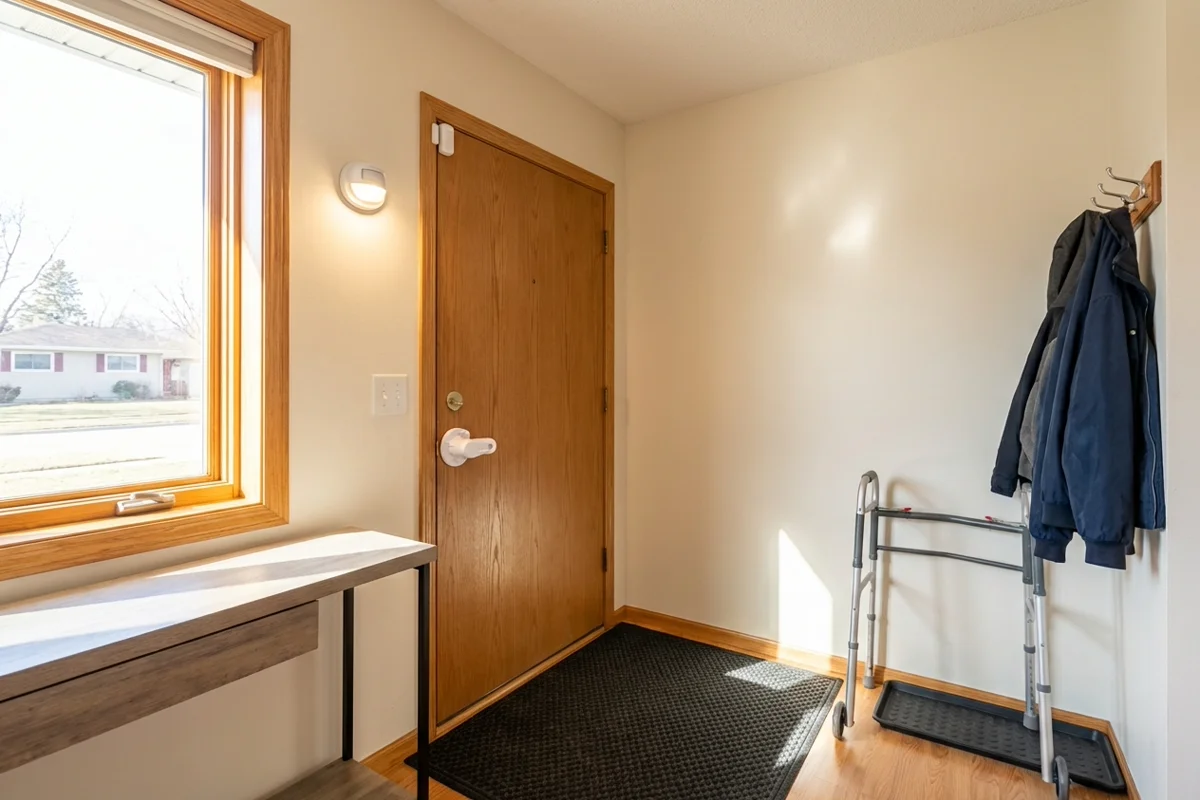
- Use door alarms: Simple, inexpensive alarms that sound when a door opens
- Add childproof covers: Cover door knobs with childproof covers that require squeezing to turn
- Camouflage exits: Paint doors the same color as walls, hang curtains over doors, or place a large "STOP" sign on the door
- Secure sliding doors: Use a rod in the track or secondary locks
- Install motion sensors: Alerts you when someone approaches an exit
- Consider door mats: Dark-colored mats in front of doors may appear as holes and deter stepping through
Secure Windows and Other Access Points
- Lock windows and install window stops that prevent them from opening fully
- Secure garage doors and any doors leading to basements or attics
- Lock gates in fenced yards
- Be aware of any second-floor windows that could be accessed
Create a Safe Walking Space
Allowing safe movement can reduce the urge to leave.
- Create a secure outdoor area with a fence if possible
- Make indoor spaces walker-friendly by removing obstacles and tripping hazards
- Consider a circular walking path through the home
- Provide interesting things to look at and touch along walking routes
Use Technology
- GPS tracking devices: Worn as a watch, pendant, or placed in shoes or clothing
- Smartphone tracking apps: If they carry a phone, enable location sharing
- Home monitoring systems: Cameras and motion sensors that alert you to movement
- Bed and chair alarms: Alert you when they get up at night
Daily Strategies to Reduce Wandering
Maintain Meaningful Activities
Boredom and restlessness often trigger wandering.
- Provide regular, engaging activities throughout the day
- Include physical activities to use excess energy
- Involve them in simple household tasks like folding laundry
- Schedule walks at the same time each day with supervision
- Use activities that were meaningful to them before dementia
Address Basic Needs Proactively
- Keep regular schedules for meals and snacks
- Remind them to use the bathroom regularly
- Watch for signs of pain or discomfort
- Ensure they're getting adequate sleep
Manage the Environment
- Remove cues that trigger leaving (hide keys, coats, and purses)
- Avoid overstimulating environments that may cause them to want to escape
- Provide a calm, predictable atmosphere
- Use signs with pictures to help them find the bathroom and bedroom
Respond to Their Reality
When they say they need to leave for a reason that doesn't make sense to you:
- Don't argue or insist they're wrong—this increases agitation
- Validate their feeling: "You want to see your mother. Tell me about her."
- Redirect: "Before we go, let's have some lunch first."
- Distract with an activity or change of scenery
Preparing for a Wandering Emergency
Despite best prevention efforts, wandering incidents can still occur. Being prepared can save crucial time:
Create an Emergency Plan
- Keep current photos: Full-length and close-up photos for identification
- Know their tendencies: Where might they try to go? Past workplace? Childhood home?
- Compile emergency contacts: Neighbors, family, local police non-emergency line
- Introduce them to neighbors: Neighbors can recognize and assist if they see your loved one alone
Use Identification
- ID bracelet or necklace: Include name, "memory impaired," and emergency contact
- Labels in clothing: Sew in labels with name and phone number
- MedicAlert® + Alzheimer's Association Safe Return: A 24-hour nationwide emergency response service for individuals with dementia
Alert Local Authorities
- Register with local police—many departments keep files on at-risk individuals
- Learn about search and rescue resources in your area
- Know the non-emergency number to call for a missing person who isn't in immediate danger
If Your Loved One Goes Missing
- Start searching immediately—don't wait to see if they return
- Call 911—a person with dementia is at high risk and qualifies for immediate response
- Search high-risk areas first: Bodies of water, busy roads, and areas where they might have wandered before
- Check familiar places: Former workplace, church, childhood home area
- Alert neighbors: Quickly inform nearby residents to look out
- Provide police with: Recent photo, physical description, medical information, places they might go
Time is critical. Most wandering individuals are found within a few miles of where they went missing, often within 24 hours. However, the longer they're missing, the greater the danger.
When Professional Care Helps
Wandering often indicates that the level of supervision needed has increased. Professional dementia care can help by providing:
- Constant supervision during waking hours
- Trained response to wandering attempts
- Overnight monitoring through 24-hour care
- Engaging activities that reduce restlessness
- Consistent routines that minimize confusion
For families where wandering has become a significant concern, round-the-clock care ensures someone is always watching, even at night when many wandering incidents occur.
At Home Healers Dementia Care Services
At At Home Healers, we understand the fear and exhaustion that come with wandering concerns. With over 20 years of combined experience serving families in Fort Wayne and Northeast Indiana, our caregivers are trained in wandering prevention and dementia safety.
Our specialized dementia care services include:
- Trained caregivers: Skilled in redirecting wandering behavior and ensuring safety
- Flexible scheduling: From daytime supervision to 24-hour care
- Home safety assessments: Identifying and addressing wandering risks
- Engaging activities: Reducing restlessness that leads to wandering
- Respite care: Giving family caregivers needed breaks
We serve families throughout Fort Wayne, Auburn, Columbia City, and surrounding Northeast Indiana communities.
Contact us for a free consultation to discuss dementia care and wandering prevention for your loved one.
Frequently Asked Questions
Why do dementia patients wander?
Wandering can be triggered by confusion, restlessness, searching for something familiar, following a past routine (like going to work), medication side effects, or trying to fulfill a basic need like hunger or using the bathroom.
What are the best door alarms for dementia patients?
Door contact alarms, motion-sensor chimes, and smart home alerts that notify your phone are popular options. Some families also use childproof door handle covers or high-mounted deadbolts that are less visible to the person with dementia.
Should a person with dementia who wanders wear a GPS tracker?
Yes, GPS tracking devices designed for dementia patients can be lifesaving. Options include wearable bracelets, shoe inserts, and clip-on trackers. The Alzheimer's Association also offers MedicAlert + Safe Return identification programs.


