

Falls Change More Than Bones
Every year, roughly 36 million falls occur among adults 65 and older in the United States, resulting in approximately 3 million emergency department visits for fall-related injuries, according to the Centers for Disease Control and Prevention (CDC). Those numbers are staggering on paper. But they don't capture what a fall actually does to someone you love.
A fall doesn't just break a hip or fracture a wrist. It breaks confidence. It plants a seed of fear that grows quietly, convincing your mom that walking to the mailbox isn't worth the risk, or that getting up at night to use the bathroom is too dangerous to attempt alone. That fear, left unchecked, leads to inactivity. Inactivity leads to muscle loss. And muscle loss leads to another fall.
This cycle has a name. Researchers call it "post-fall syndrome," and it affects up to 70% of older adults who've recently fallen, according to a study published in the Journal of the American Geriatrics Society. The physical injury heals in weeks or months. The psychological wound can last years, unless someone steps in to help break the pattern.

That's where in-home care makes its greatest impact. Not just helping with bandages and medications, but restoring the confidence that a fall steals. Families across Fort Wayne and the surrounding area are discovering that professional fall recovery care at home isn't a luxury. For many seniors, it's the difference between getting back on their feet and never quite getting there.
Common Fall Injuries and What Recovery Actually Looks Like
Not every fall sends someone to the hospital. Some result in bruises and a scare. Others change the trajectory of someone's health for good. Understanding what you're dealing with helps you plan the right level of support.
Hip Fractures
Hip fractures are the most serious and most feared fall-related injury among older adults. The National Institute on Aging (NIA) reports that more than 300,000 older adults are hospitalized for hip fractures annually, and the vast majority of these fractures are caused by falls. Recovery typically requires surgery followed by weeks of restricted mobility and months of physical rehabilitation.
The outcomes can be sobering. Studies published in the National Institutes of Health (NIH) database show that approximately 20-30% of older adults who fracture a hip die within one year, and many who survive never regain their prior level of independence. Early, consistent rehabilitation support is one of the strongest predictors of a better outcome.
Wrist and Arm Fractures
When people fall, their instinct is to catch themselves with outstretched hands. This leads to wrist fractures (Colles' fractures) and, less commonly, upper arm breaks. These injuries typically heal within 6-8 weeks, but for older adults, the recovery period creates secondary risks. When one arm is in a cast or sling, balance suffers. Daily activities like cooking, bathing, and dressing become difficult. The risk of a second fall increases because the body's natural balance mechanism is compromised.
Head Injuries
Falls are the leading cause of traumatic brain injuries (TBIs) in adults over 65, according to the CDC. Even a "minor" bump to the head can cause a subdural hematoma, which may not show symptoms for days or weeks. Seniors taking blood thinners face especially high risks. This is one reason why medical professionals emphasize monitoring after any fall involving head contact, even if the person initially seems fine.
Sprains, Strains, and Soft Tissue Injuries
These are the most common fall injuries and the easiest to dismiss. But for a 78-year-old, a badly sprained ankle can mean weeks of limited mobility, enough time for muscle deconditioning to set in. Soft tissue injuries also cause lingering pain that discourages movement, feeding directly into that fear-of-falling cycle.
Recovery Timeline: What to Expect
| Injury Type | Initial Recovery | Full Recovery | Key Support Needed |
|---|---|---|---|
| Hip fracture | 4-6 weeks (surgical healing) | 6-12 months | Mobility assistance, PT support, 24-hour care initially |
| Wrist fracture | 6-8 weeks (cast period) | 3-4 months | Help with daily tasks, bathing, meal prep |
| Head injury (mild TBI) | 2-4 weeks | 1-3 months | Monitoring for symptoms, cognitive support |
| Severe sprain | 2-4 weeks | 6-8 weeks | Mobility support, fall prevention modifications |
| Bruising/soft tissue | 1-2 weeks | 2-4 weeks | Pain management, activity encouragement |
These timelines vary based on overall health, age, nutrition, and the presence of other conditions like diabetes or osteoporosis that slow healing.
The First 48 Hours After a Fall
The first two days after a fall are a window that matters more than most families realize. Whether your loved one was treated in the ER and sent home or was hospitalized and just discharged, this period sets the tone for everything that follows.
What needs to happen immediately:
-
Medical follow-through. Discharge instructions need to be followed precisely. Medications may have changed. Follow-up appointments need scheduling. A caregiver can manage all of this while your loved one focuses on resting.
-
Home safety assessment. The spot where the fall happened needs attention right away. Was it a loose rug? Poor lighting? A cluttered hallway? Our guide to senior home safety covers what to look for room by room, but in the first 48 hours, focus on clearing the path between the bedroom, bathroom, and kitchen.
-
Pain and swelling management. Keeping ahead of pain is easier than chasing it once it becomes severe. A caregiver ensures medications are taken on schedule and watches for signs that pain management isn't working.
-
Emotional support. Your loved one may not say it, but they're scared. They're replaying the fall in their mind. They're wondering if it'll happen again. Having someone calm and reassuring nearby, not hovering but present, makes a real difference in those first days.
Families in the Auburn and Huntington areas often reach out to us during this exact window, when the reality of recovery at home hits and they realize they need professional support.
How In-Home Care Supports Fall Recovery
Recovery after a fall isn't a single task. It's a web of physical, emotional, and practical needs that shift from week to week. Here's what professional in-home care actually provides during each phase.
Mobility and Physical Recovery Support
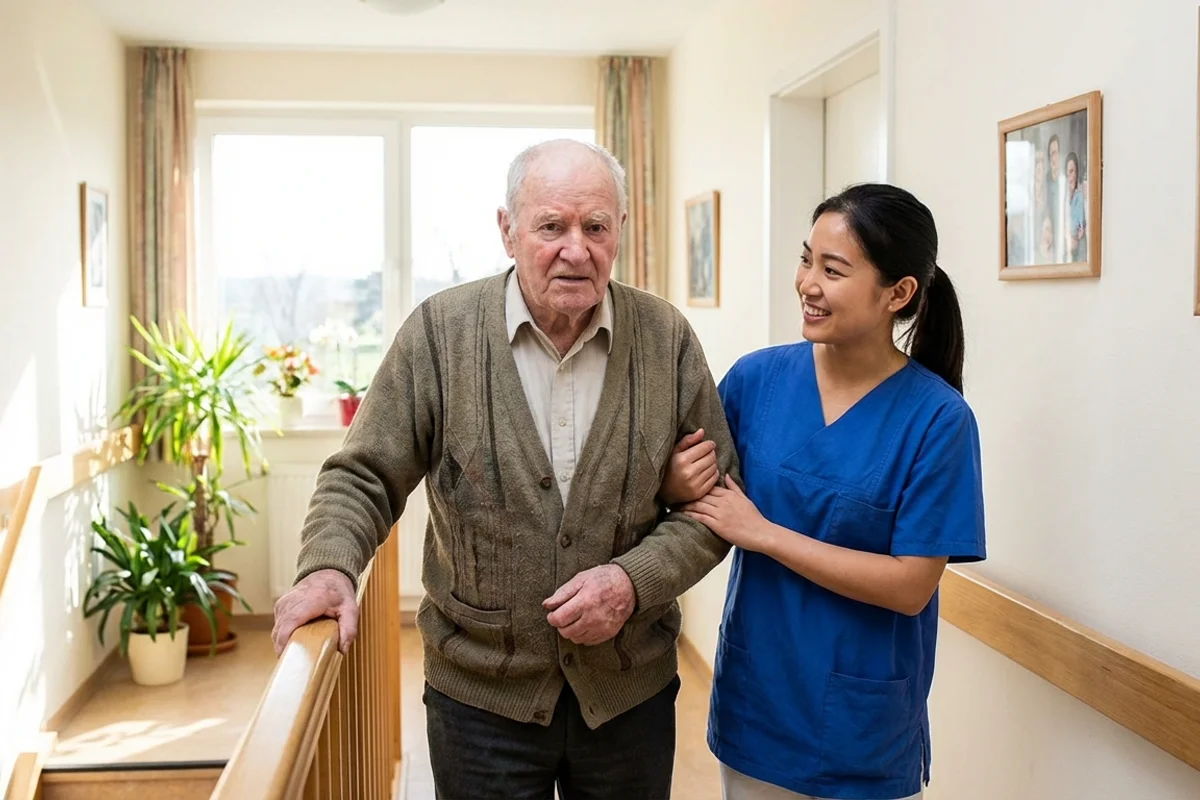
A caregiver trained in fall prevention assistance knows how to help your loved one move safely without doing everything for them. That balance matters. Too much help breeds dependence. Too little creates another fall risk.
During recovery, a caregiver:
- Assists with transfers in and out of bed, chairs, and vehicles
- Supports walking practice as strength returns, using proper gait belt technique
- Encourages prescribed physical therapy exercises between formal PT sessions
- Helps with bathroom transfers, which is where a large percentage of in-home falls occur (our bathroom safety guide covers why this room demands special attention)
Medication Management
Post-fall medication regimens often change. New pain medications are added. Blood thinners may be adjusted. Anti-anxiety medications might be prescribed. Keeping track of what to take, when to take it, and what side effects to watch for is overwhelming for someone who's also dealing with pain, fear, and limited mobility.
A caregiver provides reminders, organizes medications, and watches for adverse reactions like dizziness or excessive drowsiness, both of which increase the risk of falling again.
Home Safety Modifications
After the immediate dangers are addressed, a longer-term safety assessment identifies changes that reduce future fall risk:
- Installing grab bars in bathrooms and along hallways
- Improving lighting, especially in stairways and nighttime paths
- Removing or securing throw rugs
- Rearranging furniture to create clear walkways
- Setting up a bedroom on the main floor if stairs are a barrier
Nutrition and Hydration
Healing requires fuel. Older adults recovering from falls often lose their appetite due to pain, medication side effects, or depression. Dehydration is another silent risk, contributing to dizziness and confusion that raise fall risk. A caregiver prepares nutritious meals, encourages fluid intake, and monitors weight changes that could signal inadequate nutrition.
Transportation to Follow-Up Care
Recovery typically involves multiple follow-up appointments: orthopedic checks, physical therapy sessions, imaging, and primary care visits. When your loved one can't drive, transportation assistance ensures they don't miss the appointments that keep recovery on track.
Breaking the Fear-of-Falling Cycle
The psychological side of fall recovery deserves as much attention as the physical side. The World Health Organization (WHO) identifies fear of falling as a significant risk factor for future falls, creating a self-reinforcing cycle that's difficult to break without intervention.
Here's how the cycle works:
- The fall happens. It may be sudden and shocking, or it may be a slow collapse when legs simply give out.
- Fear develops. Your loved one starts avoiding activities they associate with falling risk: walking without assistance, going outside, using stairs.
- Activity decreases. Less movement leads to muscle atrophy, reduced balance, and declining cardiovascular fitness.
- Physical capacity drops. The body becomes weaker, less stable, and less capable of recovering from a stumble.
- Another fall becomes more likely. And when it happens, the fear deepens further.
In-home caregivers break this cycle by being a steady, encouraging presence. They don't push your loved one beyond safe limits, but they do encourage movement. They walk beside them. They celebrate small victories, like making it to the kitchen without the walker for the first time. They provide the safety net that makes trying feel less terrifying.
Companionship care plays a bigger role in fall recovery than many families expect. Isolation amplifies fear. Having someone to talk to, share meals with, and simply be present with during recovery reduces anxiety and depression, both of which are linked to worse recovery outcomes.
Preventing the Next Fall: What Changes After the First One
The statistics on repeat falls are sobering. If you've already read our article on senior fall statistics, you know that one in four adults 65 and older falls each year. What that article also covers is that having one fall doubles your risk of falling again.
Prevention after a first fall involves several layers:
Medical review. A physician should review all current medications for fall-risk side effects (dizziness, drowsiness, blood pressure drops). Vision and hearing should be tested. Bone density may need evaluation.
Strength and balance training. Structured exercise programs designed for fall prevention, such as those based on the CDC's STEADI initiative, have been shown to reduce fall risk by up to 23%. A caregiver can support these exercises at home between formal therapy sessions.
Environmental modifications. Our step-by-step guide for what to do after a fall walks families through the immediate response and the longer-term changes needed at home.
Assistive devices. Walkers, canes, shower chairs, and bed rails aren't signs of giving up. They're tools that maintain independence safely. A caregiver helps your loved one use them correctly, which matters because improperly used assistive devices actually increase fall risk.
Footwear. This one is simple but often overlooked. Loose slippers, socks on hardwood floors, and worn-out shoes contribute to more falls than most people realize. Properly fitted, non-skid footwear is one of the easiest and most effective changes a family can make.
When to Consider 24-Hour Care During Recovery
Not every fall recovery requires around-the-clock support. But certain situations make 24-hour home care the safest option, at least temporarily:
- Immediately after hip fracture surgery. The first 1-2 weeks at home typically require continuous support for mobility, medication management, and safety monitoring.
- When your loved one lives alone. Solo recovery after a serious fall dramatically increases the risk of a second fall, missed medications, and delayed response to complications.
- If cognitive decline is present. A senior with dementia or early Alzheimer's may not remember fall precautions, may attempt unsafe movements, or may not be able to call for help if they fall again.
- When nighttime is the danger zone. Many falls happen during nighttime bathroom trips. If your loved one is getting up multiple times at night during recovery, having someone awake and alert to assist prevents the most common scenario for repeat falls.
- If the family caregiver is burning out. Recovery can stretch for months. If you're the primary caregiver and you're exhausted, stressed, or unable to provide the physical assistance needed, bringing in professional support protects both you and your loved one.
24-hour care doesn't have to be permanent. Many families use it for the first few weeks of recovery and then transition to part-time or hourly care as their loved one regains strength and confidence.
At Home Healers Fall Recovery Services
Recovering from a fall takes more than rest. It takes the right support at the right time, from someone who understands both the physical demands and the emotional weight of what your loved one is going through.
At Home Healers provides fall recovery care across Fort Wayne, Auburn, Huntington, and surrounding communities in northeast Indiana. Our caregivers are trained in fall prevention techniques, safe transfer methods, and the kind of patient encouragement that helps seniors move past fear and back into their lives.
Our fall recovery support includes:
- Safe mobility assistance and transfer support
- Medication reminders and monitoring
- Meal preparation focused on healing nutrition
- Transportation to physical therapy and medical appointments
- Home safety assessments and modification recommendations
- Companionship that combats isolation during recovery
- Overnight and 24-hour care options for the highest-risk recovery periods
Whether your loved one is coming home after hip surgery or recovering from a fall that didn't require hospitalization but still shook their confidence, we're here to help them heal safely.
Ready to talk about fall recovery care? Contact At Home Healers to schedule a free consultation. We'll discuss your loved one's situation, the level of support they need, and how we can help them get back to living with confidence.
Frequently Asked Questions
How long does it take a senior to recover from a fall?
Recovery time varies by injury: hip fractures take 6-12 months, wrist fractures 3-4 months, and soft tissue injuries 2-4 weeks. Overall health, nutrition, and consistent rehabilitation support are the strongest predictors of a full recovery.
Why are falls so dangerous for elderly people?
Falls don't just cause physical injuries like fractures. Up to 70% of seniors develop post-fall syndrome, a fear of falling that leads to inactivity, muscle loss, and a higher risk of another fall. This cycle can rapidly diminish independence.
Do seniors need home care after a fall?
Professional in-home care is especially important after hip fractures, for seniors living alone, those with cognitive decline, and when nighttime bathroom trips increase fall risk. Many families use 24-hour care for the first few weeks then transition to part-time support.


